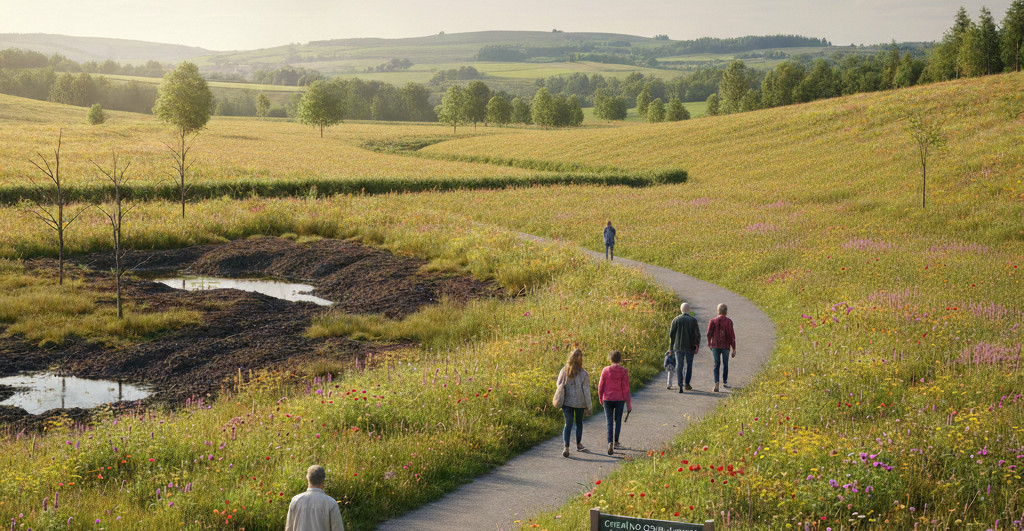
Drive east out of the valley and the ground begins to change. The fields flatten, then rise again into low, too-regular hills that no glacier put there.
Ayrshire's coalfield was among the most productive in Scotland, and at its height it employed thousands of men from villages that no longer exist in any meaningful sense. What remains is mostly landscape: bings softened by sixty years of grass, roads that end abruptly, rows of houses facing nothing in particular.
The valley itself was never a mining district in the way that Cumnock or Auchinleck were. But it supplied men to the pits, took in families when they closed, and absorbed the long economic shadow that followed.
That shadow is still visible in the population figures. The villages that grew fastest in the nineteenth century are the ones that have shrunk most since.
We will be returning to this in a longer series. If your family worked the pits and you have photographs or papers, we would like to hear from you.